
Hsy, Jonathan. "Chaucer's Englishes." Throughlines. www.throughlines.org/suite-content/chaucers-englishes. [Date accessed].
Where do our rules about "correct" English come from? Jonathan Hsy goes back to the Middle Ages to find out. Geoffrey Chaucer, often called the "Father of English Poetry," wrote in a multilingual world of English, French, and Latin, at a time when there were many Englishes rather than one. Tracing the slow standardization of written English from the 15th-century English Chancery to today's debates over an official national language, Hsy shows that the idea of a single, superior English was built by cultural and political investment in a white anglophone national identity, not by the language itself.
To disrupt this narrative, Hsy reads Chaucer alongside Jamaican poet Louise Bennett, whose poem "Bans O' Killing" asks exactly which English a would-be language-purifier intends to eliminate. Bennett reminds us that prestigious "standard" English began as a 14th-century dialect too, and that no variety of a language is inherently better than another.
For anyone teaching Chaucer, the history of the English language, or the politics of dialect and multilingualism, this approach connects medieval literature directly to present-day questions about immigration, education, and national belonging. It's a compact introduction to how language becomes a tool of power, and, in the right hands, a tool of resistance.
Further learning
Recommended

Othello and Barbary's blues
Justin P. Shaw is interested in how appropriation can mean theft as well as “making something new.” Using a framework of Black music and the history of appropriation of the Blues to shed light on Desdemona’s memory of Barbary’s song in Shakespeare's Othello, Shaw asks the question: where is the line between tribute and theft?

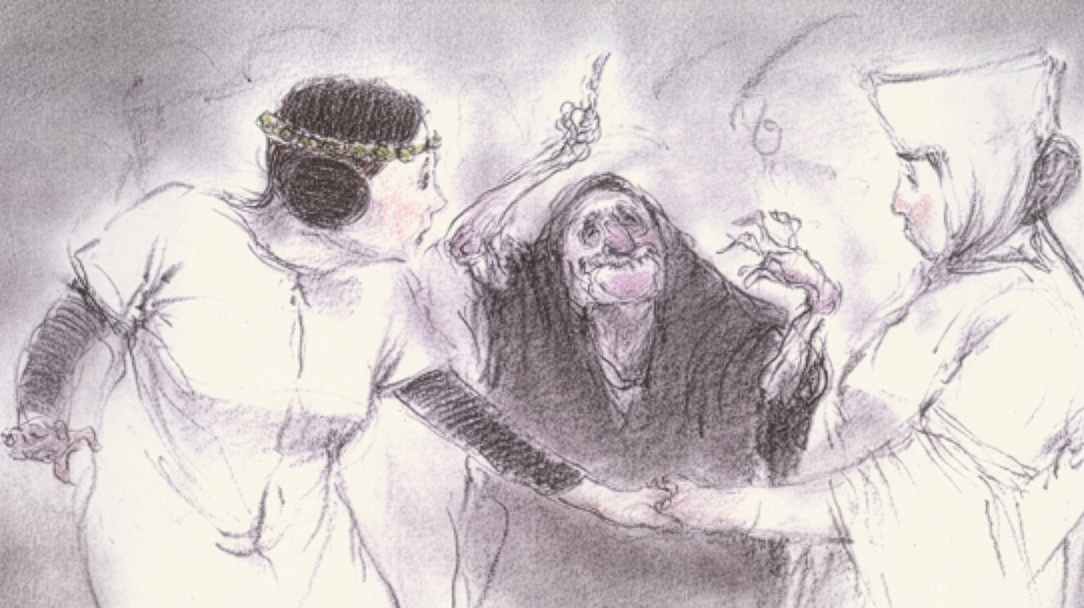
Teaching The Wife of Bath's Tale through adaptations
Chaucer's most outspoken pilgrim gets three modern makeovers: an animated film, a spoken-word performance, and a poem staged in a London market. Jonathan Hsy shows how these adaptations open fresh classroom conversations about gender, power, and justice.

